

Potty training puppies can feel like a full-time job. I’ve helped thousands of puppies through this stage, and it always comes down to three key things: timing, routine, and clear communication.
Let’s break it down in a way that’s simple to follow and actually works.
Q: When should I take my puppy outside?
A: First thing in the morning, after meals, after naps, after playtime, and right before bed. As a general rule, anytime your puppy transitions from one activity to another, it’s a good time to take them out.
Q: How do I make the crate part of the routine?
A: Place the crate near the door you use for potty breaks. When it’s time to go out, open the crate and say something consistent like, “Let’s go potty!”
This helps your puppy connect the crate with going outside.
Q: What’s a good potty training cycle?
Here’s the simple daily rhythm I give to new puppy clients:
- Let your puppy out of the crate first thing in the morning. Go straight outside.
- When they go potty, calmly say, “Good potty!” and offer a treat.
- Afterward, go for a short walk or have a bit of playtime.
- Come inside and place your puppy in a gated area or exercise pen while you prepare breakfast.
- Feed them in the crate.
- After eating, let them rest in the crate for 20 to 30 minutes.
- Take them outside again and reward them if they go potty.
- Then it’s time for training, play, or a short walk—followed by another rest in the crate.
Repeat this cycle throughout the day, adjusting it to fit your household schedule.
Q: What if my puppy is having accidents?
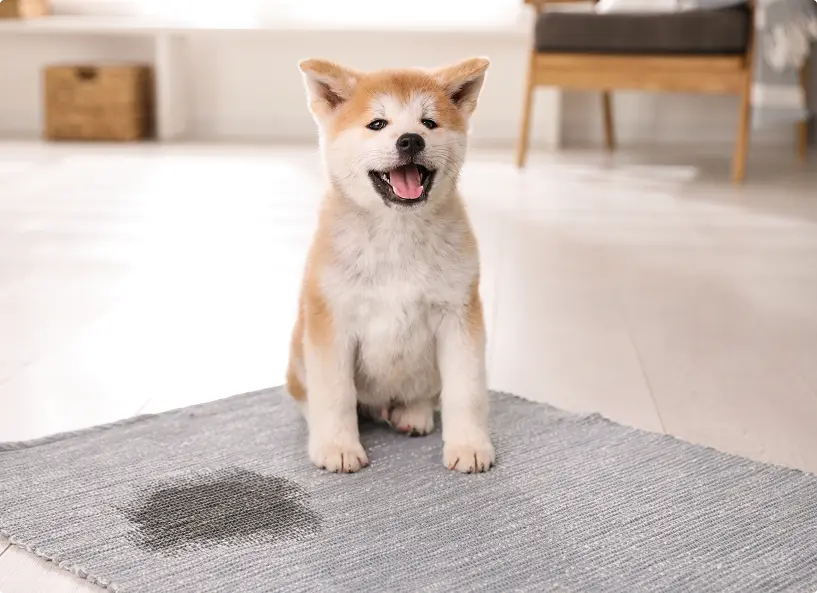
If your puppy has an accident, it usually means one of three things:
- You waited too long.
- They were too distracted and didn’t finish outside.
- They haven’t fully learned the pattern yet.
If it happens, stay calm, clean it up, and move on. Avoid punishment. Instead, revisit your timing and continue building the routine.
Q: How long can a puppy hold it?
A good rule of thumb: one hour for every month of age.
So, a three-month-old puppy may be able to wait about three hours between potty breaks during the day.
Q: What’s the most important thing to remember?
Consistency. That’s what builds reliable habits.
When the crate is part of a predictable, positive routine, and never used as punishment, your puppy will learn faster and feel more secure.
And remember, if you’re feeling stuck or unsure, you’re not alone. We help with this all the time at Good Dog Paws.